
- Teacher: nesrine selatni
- Teacher: Djanette BAROUR
- Teacher: Doniazed MEHAMDIA
- Teacher: Abedelhamid ACHOURI
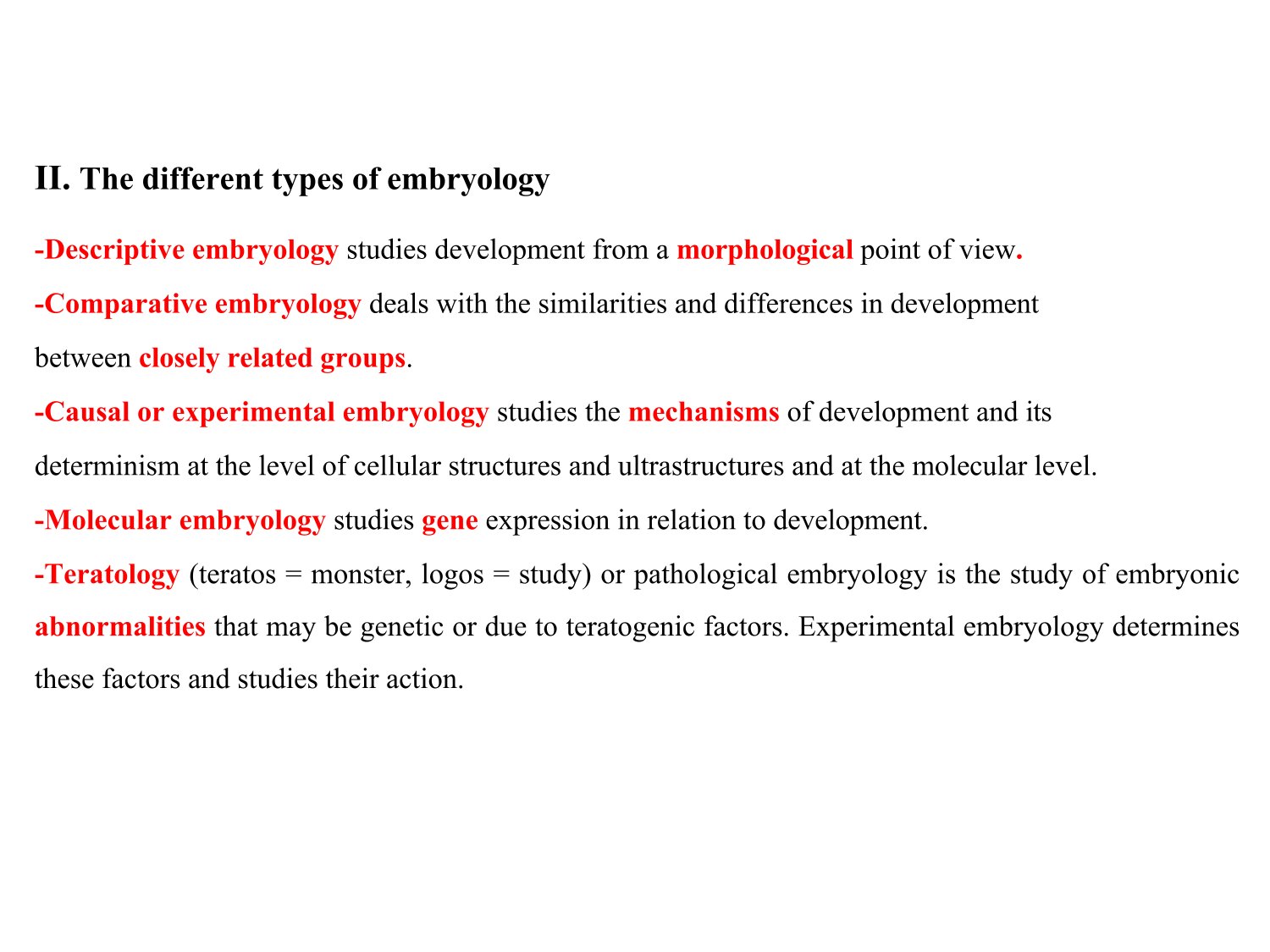
Descriptive embryology is an essential step in understanding the causes of developmental phenomena. This book has therefore been designed to provide students with the basic descriptive elements of embryogenesis.
For the majority of medical students, developmental biology, in all its various facets, is a new discipline that is both fascinating and difficult to grasp. Acquiring a new vocabulary, visualising three-dimensional structures evolving over time, and reflecting on concepts that integrate all biological disciplines are indeed the obstacles to be overcome for anyone discovering embryology.
This document serves as a teaching aid for the EMBRYOLOGY course intended for first-year medical students. Designed for educational purposes, it is drawn from the national curriculum and aimed at students to enable them to deepen their knowledge of embryonic development.
Learning objectives
- Identify the origin of tissues and cells in order to distinguish between normal and pathological conditions (malformations, inflammation, infection, neoplasia, etc.)
- Identify the origin of tissues and cells in order to explain organ development
- Describe the different stages of gametogenesis (oogenesis, spermatogenesis)
- Describe the pre-morphogenetic period (from fertilisation to blastocyst formation).
- Describe primordial morphogenesis (formation of a three-germ layer embryo)
- Describe secondary morphogenesis (formation of the neural tube and circulatory system)
- Describe definitive morphogenesis (formation of the initial structures from which organs develop)
- Describe the origin and developmental stages of the appendages
- Describe atypical phenomena associated with physiological (twin) and pathological (malformations, ectopic pregnancy, etc.) embryonic development
Syllabus for the Embryology module
Extract from the national veterinary curriculum
Level: 1st Year Veterinary Medicine.
Module: Embryology.
Semester: 2
Academic Year: 2025/2026
Credit weighting: 2
Language of instruction: English.
Module coordinator: Dr Houria OUENNES.
Academic rank: MCA.
Department of Veterinary Sciences
Email: h.ouanes@univ-soukahras.dz
Teaching methods:
Teaching is delivered in the form of: ✓ Lectures: 30 hours (of which 6 hours are dedicated to students’ independent study).
✓ Practical sessions (TP): 15 hours.
Assessment methods
- Continuous assessment: The continuous assessment (CA) mark will be based on marks for tutorials, tests, attendance and participation, as well as any other criteria the lecturer deems appropriate in agreement with the administration.
- The EMD: a mid-term exam will be scheduled at the end of the course.
- Practical work (PW): PW will be assessed by an examination covering various aspects of chemistry, with the final mark taking into account the examination mark, attendance and student participation.
- A resit examination
The weighting of the final mark for the subject will be as follows:
- EMD: 60%. - Continuous assessment (CC): 20%. - Practical test: 20%.
- The final mark for the regular examination period is calculated as follows:
[(EMD × 0.6) + (CC × 0.2) + (TP × 0.2)] × 2 (coefficient).
- The mark
- Teacher: Houria OUANES
- Teacher: Nassiba REGHAISSIA
- Teacher: Soumaya BOUKERCHE